Skip to content

Megaproject management has become a central topic in Iran’s development agenda. These projects include metro lines, energy power-plant development, national oil and gas projects, and large-scale public infrastructure. Their substantial financial and technical scale, broad range of stakeholders, and direct impact on national economic development require precise management, cross-sector coordination, and data-driven decision-making.
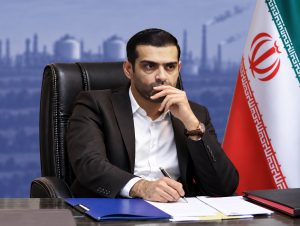
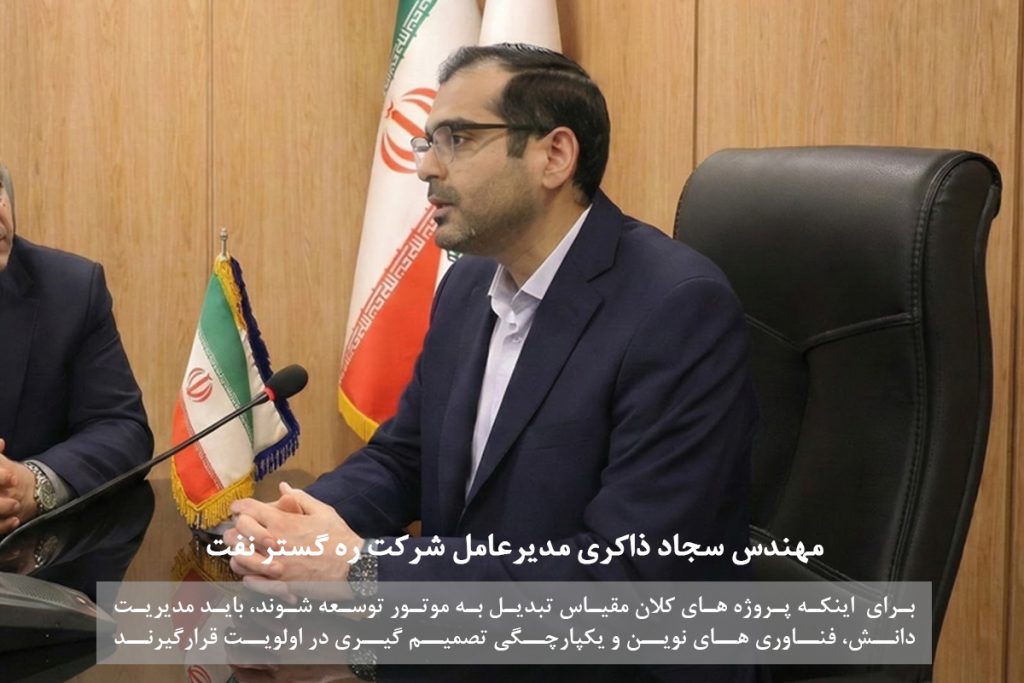
Within this context, we conducted an extensive analytical interview with Sajjad Zakeri, CEO of Rah Gostar Naft to examine the current state of megaproject management and the challenges and opportunities ahead. The discussion seeks to provide a clear view of current trends and the country’s potential paths forward.
Rah Gostar Naft Company, a subsidiary of Oil Industry Investment Group, was established in 1999 to serve as the group’s construction and development arm. Holding top-level qualifications for buildings, roads and transportation, oil-industry, and water projects, the company has used its experience, engineering expertise, and specialist workforce to grow rapidly and become one of Iran’s leading and influential construction and industrial companies.
At the beginning of the interview, we asked Engineer Zakeri to explain why major projects in Iran are so complex. Referring to their multilayered nature, he said: “Megaprojects are difficult even in developed countries because of financing constraints, management complexity, and the number of stakeholders. In Iran, however, economic volatility, rapidly changing regulations, complex contract structures, and financial instability make them substantially more difficult.”
He identified the inability to plan for the long term as one of the most serious problems. “To preserve profitability and commercial viability on a major project, costs, resources, and schedules must be forecast over a three-year horizon. But when the prices of raw materials, equipment, and even operating expenses fluctuate over short periods, planning becomes inherently high-risk.” He added that economic instability forces project managers to spend considerable time repeatedly revising plans—a process that, under international standards, is performed only at limited intervals.
The conversation then turned to energy, a field in which Rah Gostar Naft has many years of activity and extensive experience managing and executing major projects. Engineer Zakeri He emphasized that the challenges in the energy sector are not solely technical. “For example, procuring strategic equipment for some projects requires engagement with foreign manufacturers, standards coordination, and management of import processes. This is invariably time-consuming and dependent on international conditions.”
He added that managerial issues are just as important as equipment procurement: “One of the most common challenges is delayed financing. When project financing is delayed, the contractor can no longer operate at full capacity. This leads to repeated stoppages, lower efficiency, and higher costs.”
He also identified frequent changes in client requirements as one of the costliest project problems. “When a client changes its requirements midway through delivery, some completed work becomes ineffective or incomplete, and the project departs from its original course.”
The discussion then turned to the broader causes of delay. Engineer Zakeri explained: “On major projects, one small delay can disrupt several other areas. This domino effect is a primary cause of longer delivery times and rising costs.”
Drawing on field experience, he added: “Without integrated monitoring systems, a delay in one area can spread to others and may not be discovered until the project has departed significantly from its baseline schedule.” The next topic was modern project-management technologies and the role of artificial intelligence. Engineer Sajjad Zakeri He stated plainly: “Artificial intelligence is no longer a luxury or an optional technology worldwide; it has become a requirement. Any project that does not use AI will sooner or later fall behind the global pace.”
According to him, AI has several key applications in megaprojects:
- Predicting Risks and Delays
- Analyzing Financial and Schedule Scenarios
- Optimizing the Allocation of Human, Financial, and Equipment Resources
- Monitoring Equipment Health and Predicting Failures
- Real-Time Dashboards for Faster Decision-Making
He explained that many management decisions once based on individual experience are now informed by data analysis, improving the accuracy and speed of project management. “Technology makes the project’s decision-making structure more transparent,” he said. “When data is monitored and analyzed in real time, the likelihood of human error decreases and decisions can be made more quickly.”
The conversation then moved to one of the most sensitive issues in managing national projects: Decision-Making Structure.
Drawing on his experience, Engineer Sajjad Zakeri explained: “The central problem in many major Iranian projects is the number of decision-making centers. A project that should have one client and one supervisor sometimes has several decision-making authorities. A simple decision that ought to be approved in one meeting can take weeks as it moves between departments.”
He emphasized that in developed countries, project management models assign decision-making authority and responsibility to a single command center. “If project management structures in Iran move toward integration,” he said, “a significant share of common delays can be eliminated.”
We then asked about practical solutions for improving megaproject delivery, and he identified three main priorities:
- Establishing PMO an independent and professional
- Use of Genuine EPC Contracts
- Digitalizing Project Processes
Regarding an independent PMO, he explained: “On many projects, the PMO has no meaningful role, whereas under international standards it should serve as the center for data analysis and decision support. An independent PMO structure and data-driven reporting make project management more transparent and controllable.”

He also cautioned about EPC contracts: “What is currently implemented on some projects under the title of EPC is far removed from its true meaning. Multiple contractors, successive contracts, and a lack of integration prevent full accountability.” On digitalization, he stressed that it is not an option but a necessity: “When project information is digital, reports are generated with current data, human error is reduced, and decision-making becomes significantly faster.”
In the final part of the interview, we asked Sajjad Zakeri about the future of megaprojects in Iran. He responded optimistically: “Iran has the human and technical capacity to execute large and complex projects. The country has capable engineers, experienced companies, and suitable technical expertise. But for megaprojects to become engines of development, knowledge management, innovative technologies, and integrated decision-making must be prioritized.” He emphasized: “Unless structures are reformed, major projects will become economic bottlenecks instead of development drivers.”
This extensive interview with the CEO of Rah Gostar Naft showed that managing megaprojects in Iran involves technical, financial, managerial, and structural challenges. Despite this complexity, practical and effective solutions can facilitate project delivery, including digitalization, smart technologies, a stronger PMO, and integrated decision-making centers. If these approaches are taken seriously in national projects, megaprojects can play an important role in the future of Iran’s industrial and economic development.